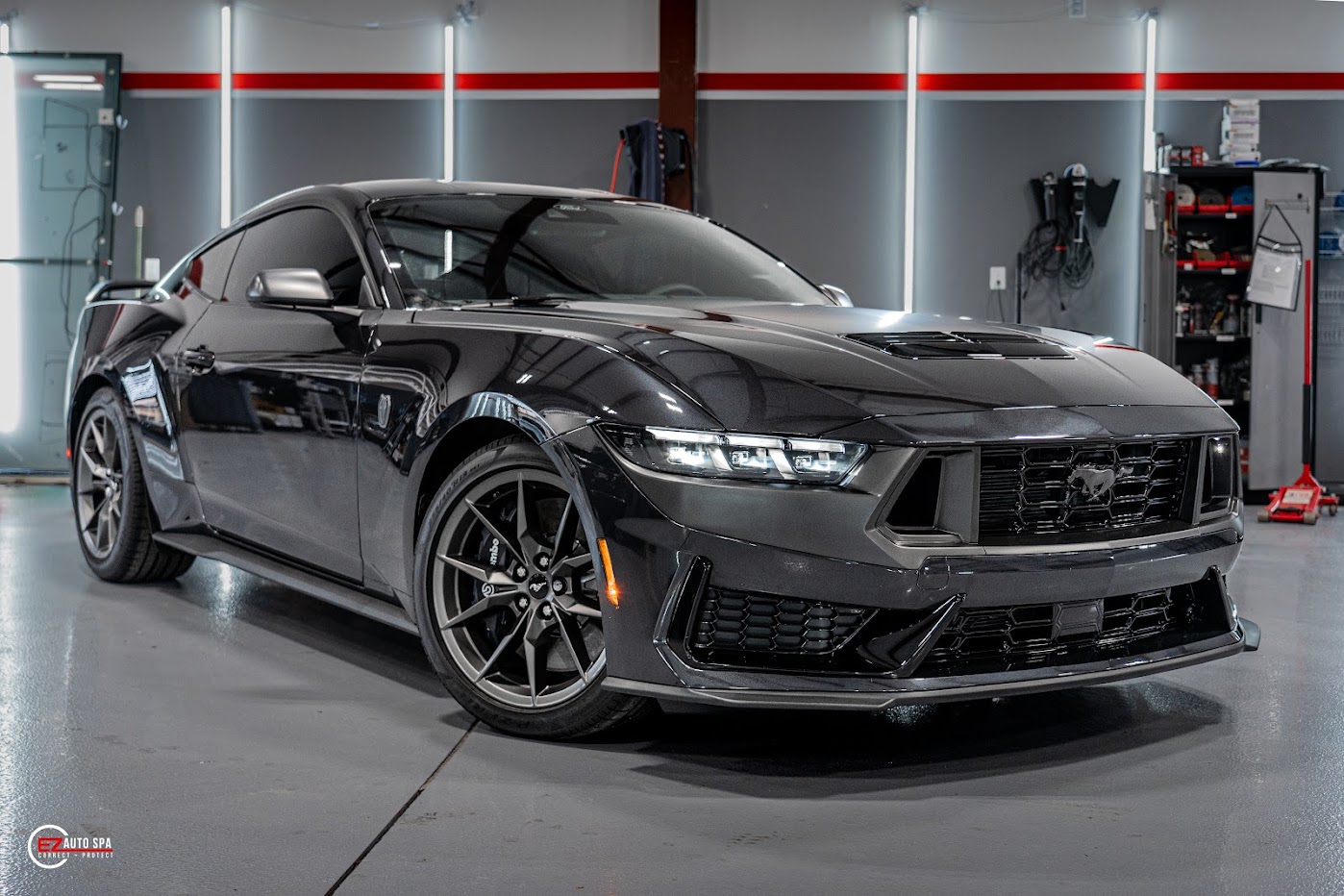
If you're cross-shopping a Mustang GT against the Dark Horse, the real question isn't "which is faster on paper" — it's whether the Dark Horse's extras are worth the price step for how YOU actually drive. Here's a straight rundown of what the money buys, minus the dealer spin.
THE PRICE GAP
The Dark Horse typically stickers roughly $11-12K over a base GT (less against a loaded GT Premium, since some Dark Horse standard gear is optional on the GT). Exact MSRP moves by model year and options, so confirm current numbers with your dealer before you commit.
WHAT'S ACTUALLY DIFFERENT (the stuff that matters)
- Engine: Same 5.0L Coyote family, but the Dark Horse is tuned to 500 hp / 418 lb-ft vs the GT's 480 hp (486 with active exhaust). It also gets a dual-throttle-body intake and forged connecting rods derived from the GT500's Predator engine — built for sustained high-rpm track use.
- Transmission: Dark Horse comes standard with the Tremec TR-3160 6-speed manual (the closer-ratio, shorter-throw unit related to the GT350/GT500 box). The GT's manual is a different, less track-focused gearbox. Both offer the 10-speed auto.
- Brakes: Brembo six-piston front calipers with larger rotors are standard on the Dark Horse.
- Suspension: MagneRide adaptive dampers are standard on the Dark Horse; they're optional on the GT Premium.
- Cooling: Extra engine-oil, transmission, and rear-diff coolers — the thing that keeps lap times consistent instead of falling off after a few hot laps.
- Differential: Torsen limited-slip standard.
- Track toys: Line lock, launch control, and the factory drift/drag brake are built in.
- Looks: Bigger rear wing, more aggressive splitter, and darkened exterior accents.
WHO SHOULD BUY WHICH (honest take)
- Get the Dark Horse if you'll actually do track days or HPDE, want the Tremec + MagneRide + Brembos from the factory, and value the cooling for repeat hard laps. On track, the difference is real, not just badges.
- The GT is the smarter buy if it's mostly a street car, weekend canyon runs, and occasional track use — you keep the V8 soundtrack and most of the fun for meaningfully less money, and you can option a Performance/Handling package to close some of the gap.
There's no wrong answer here — just the right answer for your use case. The 20 hp is the least interesting part of the story; the drivetrain, brakes, and cooling are what you're really paying for.
Owners: which way did you go, and knowing what you know now, would you make the same call? If you cross-shopped and picked the GT, tell us why — that's genuinely useful for the folks still deciding.
(Specs summarized from Ford's published figures for the S650 GT and Dark Horse; verify current-model-year MSRP and packages with your dealer.)